

TRANSFERRED FROM FACEBOOK.COM/COLLEGERULED

Hello all,
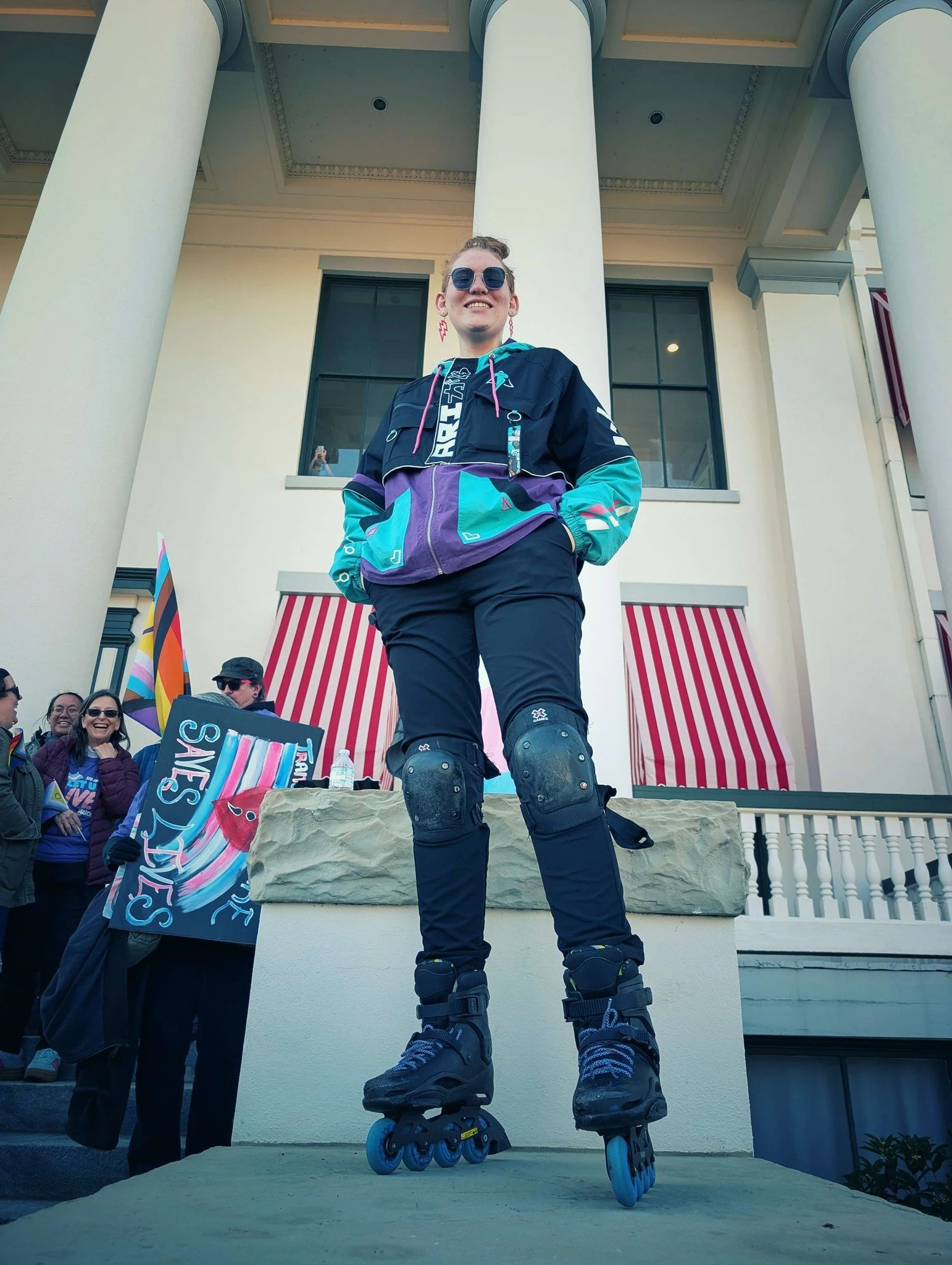
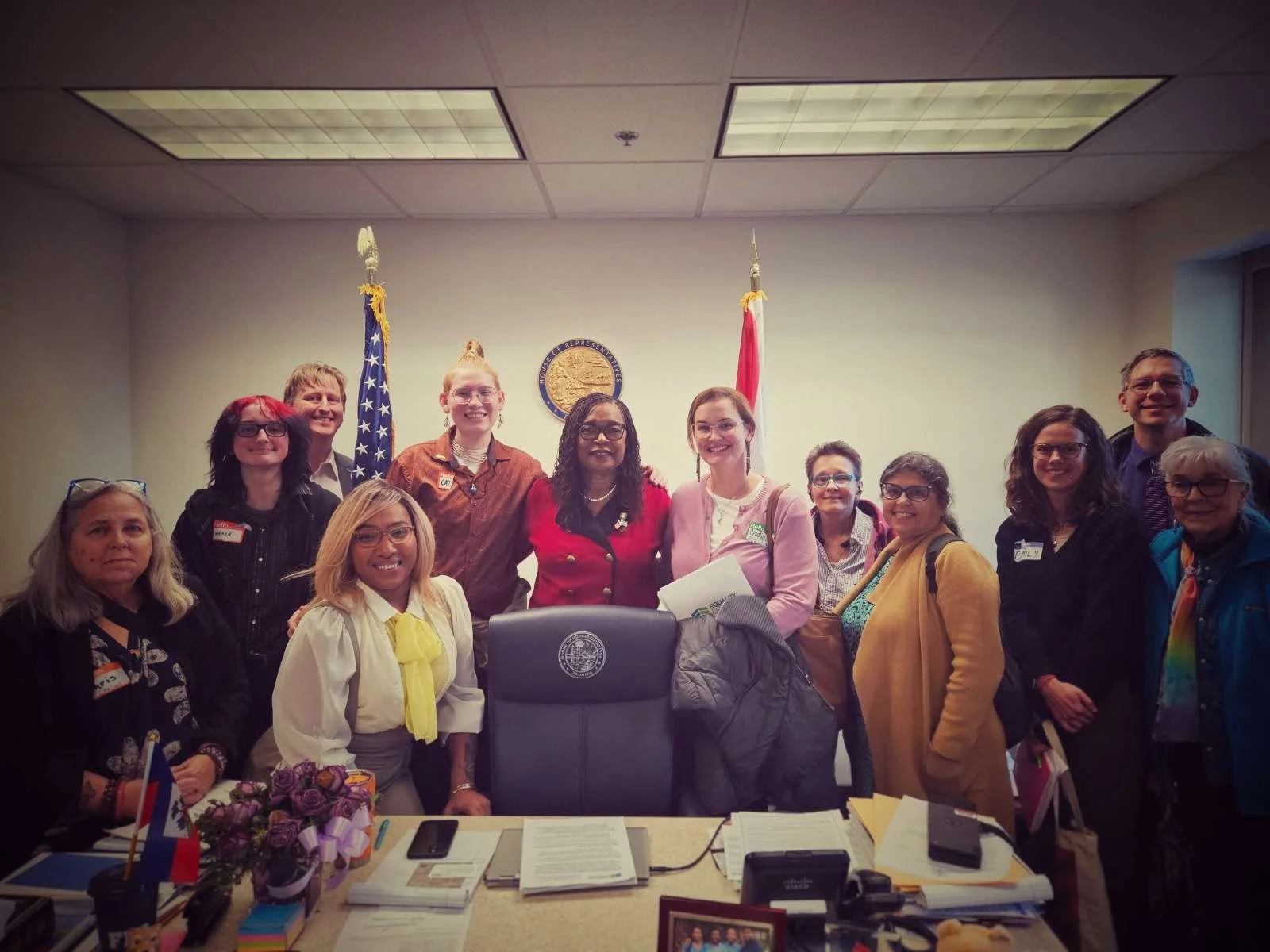
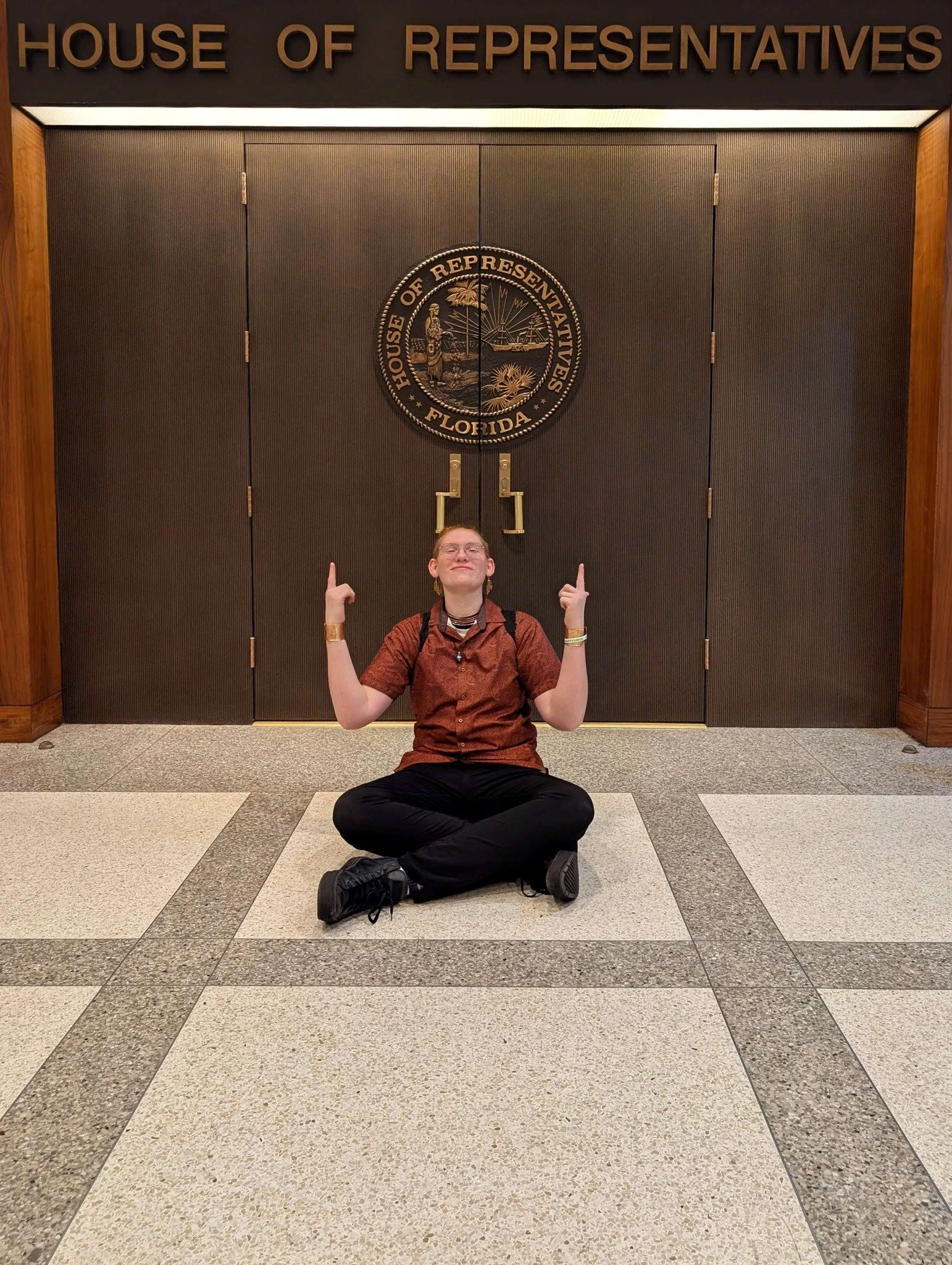
This past week, I and, a few hundred others gathered at the Florida State Capitol to lobby and protest during the 2026 Legislative Session — often called the “60 most dangerous days in Florida.” Many of the same bills that threatened human rights last year are back again.
No matter how silly I may look in some of these photos, I was spending my time sitting in bill hearings, speaking with legislators, and strengthening relationships with senators and representatives who are not just working to protect all some people, but ALL people.
This session includes bills such as the Rainbow Flag Ban (HB347), Don’t Say Gay/Trans (HB641), the Book Ban Expansion (HB1119), License to Discriminate in Healthcare (HB551), Restricting Family Surrogacy (HB1487, Barriers to IVF & Fertility Services (HB993), along with many many others that are threatening human rights. You can learn more at flhouse.gov or through Equality Florida (eqfl.org), Florida’s largest civil rights organization, which helps people learn how to lobby, get involved, and advocate for themselves. A lot of these aren’t just “queer bills.” They also target reproductive rights, healthcare, education, youth, and personal freedom.
If you want to understand how these bills may affect you, your coworkers, neighbors, or friends, read on. I’ve chosen to highlight the bills I’m most concerned about in order to raise awareness, not just share opinions. While my commentary is my own, many of the quotes are taken directly from flhouse.gov, where you can track and view legislation.
Also I am not a robot, I tried my best to quote the exact sections that I got the text from, but honestly I probably made a mistake somewhere, so if you see something wrong I'm sorry, and if you mention it I will amend it on my side.
If you’d like a more personal and opinionated perspective, I will be writing a post on my experience this year at the capitol on my Instagram @cai.haus
1 — HB1119: Book Ban Expansion
HB1119 doesn’t just target books about queer and trans identity. It also bans books about racial and ethnic injustice, history, and literature commonly used in AP and Honors classes — many of the same books we read growing up that helped shape who we are today. These books are being removed from classrooms and teacher curriculums.
The bill labels these materials as “harmful to minors.” But many of us read these exact books as minors and were not harmed by them. If anything, they helped us become more informed and empathetic people.
One of the most concerning parts of this bill states that “a resident of the county who is not the parent or guardian… may not object to more than one material per month” (s. 1006.28(2)(b?). This means someone doesn’t even need to have a child enrolled in the school system to challenge and remove books. Organized groups could rotate challengers and ban multiple books every month.
Another section says:
“Any material that is subject to an objection… must be removed within 5 school days… until the objection is resolved” (s. 1006.28(2)(a)
(An objection is just another word for a "Challenge" which anyone who keeps up with this knows what that is.)
This is already happening in some counties. A single complaint can remove a book within five days, even if it’s part of an AP or Honors curriculum. Students can lose access mid-semester, without due process. Someone’s personal discomfort can erase educational material overnight.
This removes agency from teachers, students, and schools.
It’s also important to remember that many kids rely on public and school libraries for free access to books because they can’t afford bookstores or online orders. Saying “just buy it elsewhere” ignores the reality of many families.
With HB1119 we aren’t protecting children, we’re taking away their chance to understand the world as it is, and how they fit into it.
2 — HB663: The “Abortion Bounty”
HB663 sounds like something out of science fiction.
This bill would allow certain family members — parents, siblings, spouses, or the father of the fetus—to sue anyone involved in providing abortion-inducing drugs, even if the care happens in another state.
Under this bill, an unaccepting family member could report someone for receiving abortion pills through telehealth or in person. If successful, they could receive up to $100,000 in statutory damages, plus legal fees.
With this bill, consent becomes irrelevant. A family member could override the pregnant person’s medical decisions and block access to potentially lifesaving care.
It gives relatives legal power over someone else’s body and future. This is another direct attack on bodily autonomy, especially for marginalized people.
3 — HB743: Attacking Gender-Affirming Healthcare
HB743 targets doctors and healthcare workers who provide gender-affirming care (to minors.. for now).
It criminalizes anyone who “participates, aids, or abets” in providing care to trans youth, including puberty blockers, hormone therapy, and medically supervised treatment. This could include doctors, nurses, counselors, clinics, and even primary care providers who make referrals.
Florida already severely restricts youth access to this care. But, HB743 goes further by adding felonies, lawsuits, and massive financial penalties.
The bill states:
“The Attorney General may… bring a civil action… and civil penalties of up to $100,000 for each violation” (s. 766.318(5)).
While the current language focuses on minors, it could easily be amended in the future to apply to adults as well.
This will drive healthcare providers out of Florida. As a result, trans and cisgender youth who need specialized pediatric care may be left without safe options. Families may be forced to seek unregulated care online, use medications without supervision, or travel secretly out of state.
We’ve seen this before with other healthcare bans. When legal care disappears, unsafe providers appear. Self-dosing and unverified medications lead to higher risks and complications.
The bill is so vague that even professionals ordering bloodwork or monitoring side effects could be criminalized.
Supporters claim this bill “protects children,” but research shows the opposite. Studies link access to gender-affirming care with improved mental health and lower suicide risk.
The JAMA Network study of youth ages 13–20 found that receiving gender-affirming care was associated with:
- 60% lower odds of moderate or severe depression
- 73% lower odds of suicidality over 12 months
When lawmakers block safe, supervised medical care, families don’t stop needing it. They’re pushed toward dangerous alternatives. That puts kids at real medical risk and forces parents into impossible choices.
4 — HB173: Restricting Healthcare for Minors
Another dangerous bill this session is HB173, which restricts minors’ ability to access private and confidential healthcare. This is a verrrry long read. The rundown is that the bill, if passed would require parental consent for many medical services. It states:
“A health care practitioner… may not provide… health care services or prescribe medicinal drugs to a minor child without first obtaining written parental consent.” (s. 1014.06(1))
This means that in most cases, youth cannot receive care without their parent being notified and approving it first. So when it comes to sexually transmitted infections or an abortion, a student who is scared to tell their parents may avoid getting tested, avoid getting treated, or avoid seeking help altogether; and that is exactly when it becomes dangerous.
So while minors may still be examined, they cannot receive treatment for STIs, antibiotics for infections, hormonal treatments, mental health medication, and so much more without parental permission. The bill also strengthens parents’ access to students’ personal health information. With it, schools are prohibited from withholding information and must notify parents about changes in a student’s “mental, emotional, or physical health” (s. 1001.42(8)(c)).
In real life, this matters.
Whether adults like to admit it or not, teenagers are sexually active. And when young people are responsible enough to seek testing, treatment, or birth control, that should be encouraged, not punished.
Not every young person can safely involve a parent in sensitive life-impacting health decisions. Some live in homes where discussing sex, gender, mental health, or relationships could lead to punishment, abuse, or being kicked out. Instead of empowering youth to take responsibility for their health and well-being, this bill puts up barriers.
When lawmakers block confidential, professional medical care, young people don’t stop having health needs. They just stop getting safe care. That leads to untreated infections, unintended pregnancies, worsening mental health, and higher long-term risks.
This bill does not protect children. It makes them more vulnerable. It prioritizes control over safety.
I was gonna make it 5 bills, but holy fucking shit I have spent over 15 hours just reading and drafting this (and IM NOT GETTING PAID to do this), and this is my 5th revision, and It's been a week since I was there, and I want this to be posted. So, I could write more, but I'm done for now. I also wanted to go off on a tangent every single bill, BUT im tryna keep it tame.
Thanks for reading, and stay safe y'all <3
